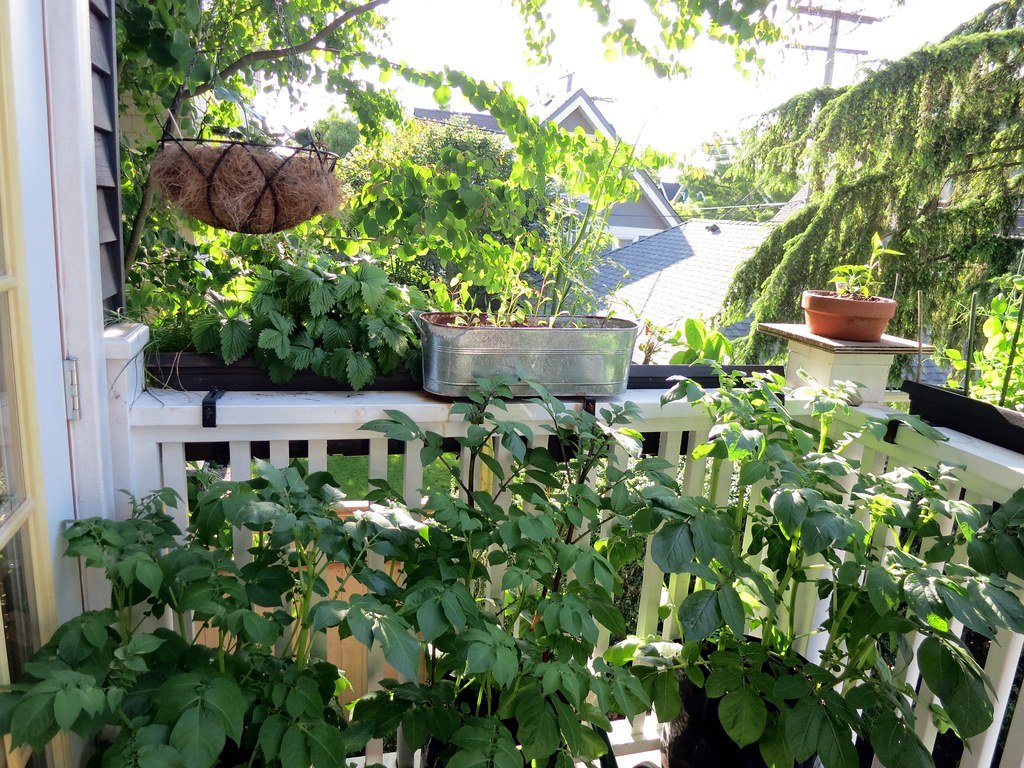
A small patio can grow real food and still look like a planned part of your home. The trick is to get the practical basics right first (sun, container size, soil and water), then arrange everything so it looks intentional rather than improvised.
This guide combines container-growing basics from university extension services with design ideas you can adapt to your own space. If you live in a community with an HOA, a condo or an apartment with balcony rules, check those rules before you buy containers or structures.
Start with sun: match plants to your patio
Sun decides what will grow well, so watch your patio over a full day and note how many hours of direct sun each spot gets.
- Fruiting crops need the most sun. Oregon State University Extension says vegetables grown for their fruit, such as tomatoes, green beans and peppers, need six to eight hours of direct sun each day.
- Leafy crops are more forgiving. Penn State Extension notes that lettuces and kale prefer some shade, which makes them a good fit for a patio that gets afternoon shade.
Pick containers that are big enough, and that drain
Small pots dry out fast and limit roots, so size matters more than most people expect.
- Tomatoes, peppers and eggplant: Penn State Extension suggests at least a 20-inch-wide pot for a single tomato plant, and about a 14-inch pot for peppers or eggplant. Oregon State University Extension recommends five-gallon containers for these deeper-rooted crops.
- Herbs and green onions: Oregon State University Extension says ten-inch pots work for green onions, parsley and many herbs.
- Shallow-rooted crops: NC State Extension recommends at least 6 to 8 inches of potting mix for lettuce, radishes and scallions, and 10 to 12 inches for carrots.
- Drainage holes are essential. Every container needs holes so excess water can drain out.
- Skip the gravel layer. NC State Extension advises never putting gravel or rocks in the bottom of a container, because water then collects in the potting mix just above the gravel.
- Mind the color. Dark containers absorb more heat than light-colored ones, and NC State Extension advises against placing dark containers in full sun.
Use potting mix, not garden soil
Garden soil is too heavy for containers. Penn State Extension recommends a soilless potting mix instead of straight garden soil, and says you can add finished compost up to about half the mix. Oregon State University Extension also advises against topsoil or general “planting mix” in containers, because it can be heavy and drain poorly.
Plan for watering
Containers dry out much faster than garden beds. Penn State Extension says most container vegetables need watering at least once a day in hot summer months. Water until it starts to drain from the bottom, keep the mix moist but never waterlogged, and don’t let containers dry out completely between waterings.
A practical idea: group containers so watering is one quick round instead of a walk around the whole yard.
Check the weight before you use a deck or balcony
Filled containers are heavy. NC State Extension notes that a 20-inch container filled with potting mix and plants can weigh 100 pounds. Before you place large containers on a balcony, deck or roof, check its load limits with your building management or a qualified professional.
Design ideas that make an edible patio look intentional
These are design suggestions, not rules. Use the ones that suit your space and any community guidelines you have to follow.
- Repeat one container style. Matching pots in one or two colors make a mix of plants look planned.
- Layer heights. Put taller crops, like a staked tomato, toward the back and lower herbs and greens toward the front.
- Use leafy color. Lettuce mixes and kale add foliage color between flowering plants.
- Frame your seating area. A row of large containers can soften the edge of a patio and define a dining or seating spot.
- Go vertical where it’s allowed. Trellises and railing planters save floor space. Secure them against wind and check any rules for railings and visible structures.
- Choose compact varieties. Oregon State University Extension notes that dwarf and miniature varieties, such as ‘Thumbelina’ carrots, suit small spaces.
- Keep it tidy. Use saucers where water could stain, sweep up spilled soil and remove spent plants promptly so the patio always looks cared for.
A simple starter layout (example)
This is one way to start; adjust it to your own sun and space.
- One large container in the sunniest spot for a tomato or pepper.
- Two medium containers in afternoon shade for lettuce and kale.
- Three 10-inch pots for parsley, green onions and another herb you use often.
Free guide
10 Beautiful Edible Plants for Small Suburban Landscapes
A free guide to edible plants that can earn their place in a front yard, a patio or a small bed. It’s available now.
Free. Confirm your email address to download it.
Related guides
- Containers & Patios: our hub for growing food in pots and small spaces.
- Growing Herbs Indoors During Winter: keep herbs going when the patio season ends.
- How Much Does a Small Vegetable Garden Really Cost?: plan your container budget.
Sources
- Penn State Extension, Container Vegetable Gardening: Four Keys to Success (updated March 30, 2026; accessed October 8, 2026).
- Oregon State University Extension Service, No yard? Grow vegetables in containers (published May 2023, reviewed 2025; accessed October 8, 2026).
- NC State Extension, Extension Gardener Handbook, Chapter 18: Plants Grown in Containers (accessed October 8, 2026).
Featured photo: “Growing a snack bar on the deck” by Ruth Hartnup (Ruth and Dave), licensed under CC BY 2.0, via Flickr.
How we write our guides
We check factual claims against reliable sources such as university extension services and government guidance. We point out when advice depends on your region or your local rules, we disclose affiliate links, and we never claim to have tested something we haven’t.