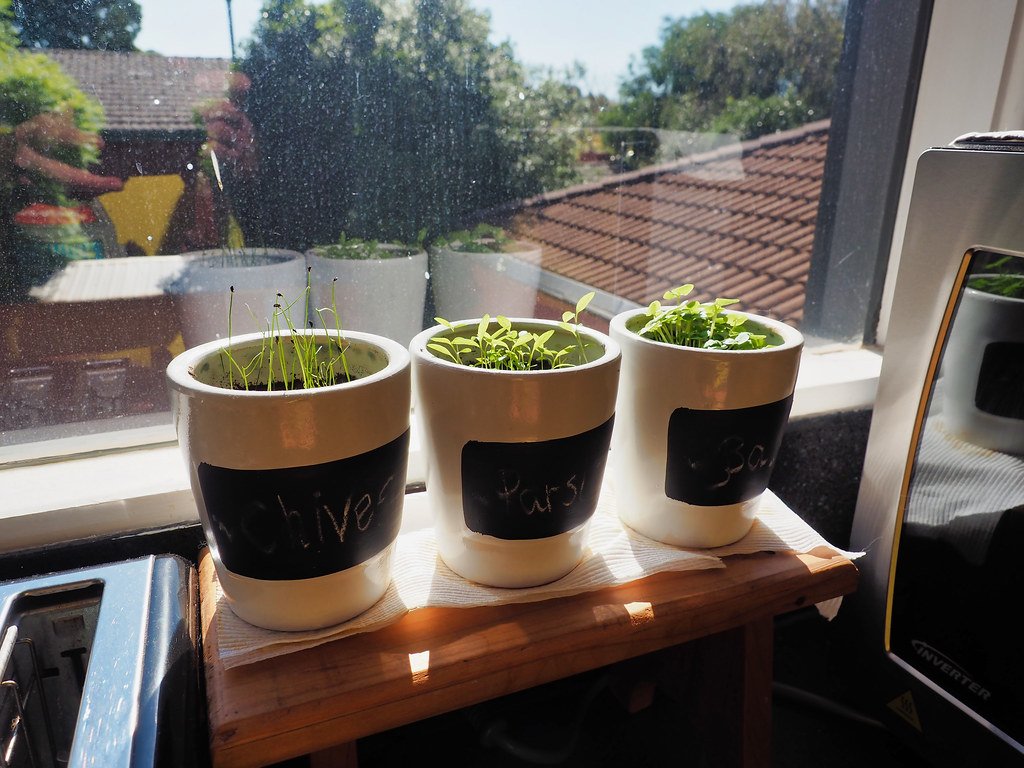
Fresh herbs don’t have to stop when the garden does. With enough light and a few habits, many herbs grow well on a windowsill or under lights through the winter.
Light is the deciding factor
Illinois Extension says herbs usually need six to eight hours of bright light each day, and that south-facing windows are great. Oregon State University Extension also calls a south-facing window usually ideal, and suggests rotating containers a quarter turn when plants start stretching toward the light.
If your herbs look pale and leggy, they probably need more light.
When the window isn’t enough, add lights
Supplemental lights can make up the difference in winter. Illinois Extension notes that most supplemental lighting must be on for 12 to 16 hours a day, and that an automatic timer helps keep the schedule consistent.
As one example from older Illinois Extension guidance, two 40-watt cool white fluorescent lights held 6 to 12 inches above the plants, running 14 to 16 hours a day, can support herbs and lettuce indoors. For LED or other fixtures, follow the manufacturer’s instructions for distance and safe use.
Herbs to try
Illinois Extension lists basil, chives, oregano, thyme, winter savory, rosemary, parsley, sage and mint as herbs that do well indoors.
A few things to know before you choose:
- Easiest from seed: chives, cilantro and basil. Oregon State University Extension says most other herbs are slow to start from seed, so buy those as young plants.
- Big growers: mint, dill, lemon balm and fennel can outgrow indoor spaces quickly, according to Oregon State University Extension.
Containers and potting mix
Use containers with drainage holes and a good-quality potting mix, not garden soil, as Illinois Extension advises.
Watering
Oregon State University Extension suggests checking the soil with your finger up to the second knuckle and watering when it feels dry. Let water drain out fully, and don’t leave pots sitting in standing water.
Temperature and humidity
Illinois Extension says room temperatures of 70°F and below are best, and recommends keeping herbs away from direct heat sources. Winter heating dries the air, and Illinois Extension suggests clustering plants together to raise the humidity around them.
Feeding
Indoor herbs grow slowly in winter. Oregon State University Extension suggests feeding with a water-soluble fertilizer at half the label’s recommended rate, about every six months.
Harvesting
Snip herbs as you need them for cooking. Regular harvesting is the point: Oregon State University Extension encourages it, and notes that harvested plants won’t always look like groomed houseplants. When a recipe calls for dried herbs, Illinois Extension’s rule of thumb is 1 tablespoon of fresh herb for every 1 teaspoon of dried.
If you have pets
Some plants can be harmful to pets. Before bringing a new plant indoors, check it against the ASPCA’s list of toxic and non-toxic plants and keep plants out of reach if you’re unsure.
Free guide
10 Beautiful Edible Plants for Small Suburban Landscapes
A free guide to edible plants that can earn their place in a front yard, a patio or a small bed. It’s available now.
Free. Confirm your email address to download it.
Related guides
- Indoor & Year-Round: our hub for growing through the colder months.
- Beautiful Edible Patio Garden Ideas for Small Spaces: plan next season’s outdoor containers.
- How Much Does a Small Vegetable Garden Really Cost?: include lights and electricity in your budget.
Sources
- Illinois Extension, Keep growing with herbs indoors this fall, winter (October 23, 2023; accessed October 8, 2026).
- Illinois Extension, Good Growing blog, Grow Herbs and Lettuce Indoors this Winter (November 17, 2017; accessed October 8, 2026).
- Oregon State University Extension Service, Growing herbs indoors adds flavor, saves money (February 2025, reviewed 2025; accessed October 8, 2026).
Featured photo: “Herbs on windowsill, April 2020” by Thomas & Liv Williams, licensed under CC BY 2.0, via Flickr.
How we write our guides
We check factual claims against reliable sources such as university extension services and government guidance. We point out when advice depends on your region or your local rules, we disclose affiliate links, and we never claim to have tested something we haven’t.