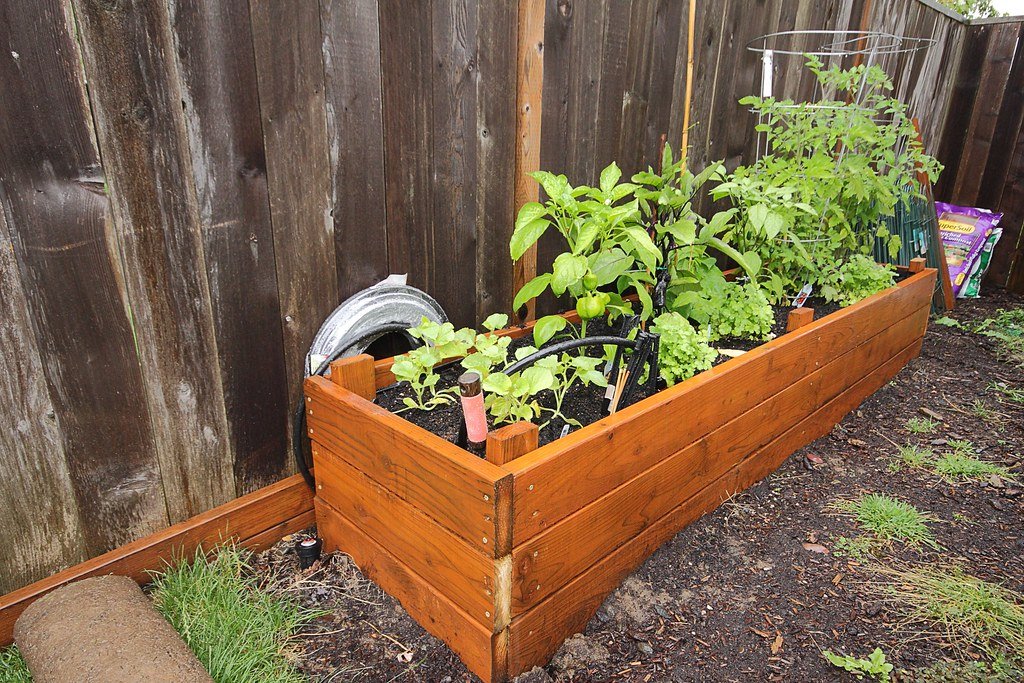
Raised beds can make a small backyard both more productive and better looking. Before you pick a style, get the basics right: a bed that’s too wide, too shallow or built from the wrong material causes problems no design can fix.
Raised bed basics
Size for reach. Keep beds about 3 to 4 feet wide so you can reach the middle without stepping in, as Clemson Cooperative Extension and Utah State University Extension both recommend. Beds you can reach from only one side, such as along a fence, should be narrower. Oregon State University Extension notes that walkways between beds are often 14 to 16 inches wide.
Height. Utah State University Extension recommends a box at least 6 to 12 inches high for the rooting depth of most vegetables, and says beds shallower than 12 inches should have no bottom so roots can reach the soil below. Oregon State University Extension advises reinforcing beds taller than about 18 inches so soil pressure doesn’t push the sides outward.
Sun. Clemson Cooperative Extension recommends a well-drained site with at least six hours of direct sun a day, ideally near a water source.
What to expect. Raised beds tend to warm up faster in spring, so the season can start earlier. Because they warm and drain faster, Utah State University Extension notes that they also need more frequent watering.
Materials. Cedar and redwood are naturally rot-resistant; Utah State University Extension notes that untreated lumber such as fir breaks down within a few years. For edible crops, Oregon State University Extension advises avoiding railroad ties and older pressure-treated wood that may contain creosote or other chemicals. Extension guidance on modern treated lumber varies, so if you’re unsure, choose a naturally rot-resistant wood or a non-wood material.
Soil. Utah State University Extension describes a homemade blend of equal parts (by volume) composted organic matter, a drainage material such as coarse sand, vermiculite, pumice or perlite, and native soil or topsoil.
How much soil you’ll need. Multiply length × width × depth, all in feet, to get cubic feet. Divide by 27 for cubic yards. For example, a 4-by-8-foot bed filled 1 foot deep holds 32 cubic feet, or about 1.2 cubic yards. Bagged soil is usually labeled in cubic feet, so divide your total by the bag size to estimate how many bags you need.
7 raised bed ideas for small backyards
These are design ideas. Combine the ones that suit your yard, and check any HOA or local rules that apply to visible structures.
- A classic cedar box with a cap rail. A flat board around the top edge gives the bed a finished look and a handy place to sit or rest tools.
- Narrow beds along a fence. Use the edge of a small yard for food while keeping the center open. Keep one-sided beds narrow enough to reach the back comfortably.
- An L-shaped bed that frames a patio. Wrapping a corner of a patio with a bed makes the garden part of the outdoor living space.
- Stone, brick or concrete-block beds. Utah State University Extension lists concrete blocks, brick and stone among possible materials. Matching them to existing paving or walls ties the garden to the house.
- A metal trough-style bed. Oregon State University Extension shows a metal trough used as a raised bed with drainage holes. Whatever container you use, make sure water can drain out.
- A bed with a trellis on the north side. Climbing crops on a trellis save ground space. Clemson Cooperative Extension advises placing tall and trellised crops on the north side of the garden so they don’t shade shorter vegetables, and West Virginia University Extension suggests putting trellises on the north side of a bed for vining plants such as beans or peas.
- A mixed edible-and-flower border. Edge a bed with low flowers or herbs so it reads as landscaping, which helps in front yards and visible spots.
Free guide
10 Beautiful Edible Plants for Small Suburban Landscapes
A free guide to edible plants that can earn their place in a front yard, a patio or a small bed. It’s available now.
Free. Confirm your email address to download it.
Related guides
- Raised Beds: our hub for planning neat, productive beds.
- Edible Landscaping: food plants that fit into an attractive front or back yard.
- How Much Does a Small Vegetable Garden Really Cost?: budget for lumber, soil and more.
Sources
- Clemson Cooperative Extension, Home & Garden Information Center, Raised Beds (modified January 28, 2025; accessed October 8, 2026).
- Utah State University Extension, Raised Bed Gardening (accessed October 8, 2026).
- Oregon State University Extension Service, Raised bed gardening (FS 270) (revised September 2020, reviewed 2024; accessed October 8, 2026).
- Clemson Cooperative Extension, Home & Garden Information Center, Planning a Garden (accessed October 8, 2026).
- West Virginia University Extension, Square Foot Gardening (May 14, 2019; accessed October 8, 2026).
Featured photo: “Raised Bed” by Mike McCune, licensed under CC BY 2.0, via Flickr.
How we write our guides
We check factual claims against reliable sources such as university extension services and government guidance. We point out when advice depends on your region or your local rules, we disclose affiliate links, and we never claim to have tested something we haven’t.